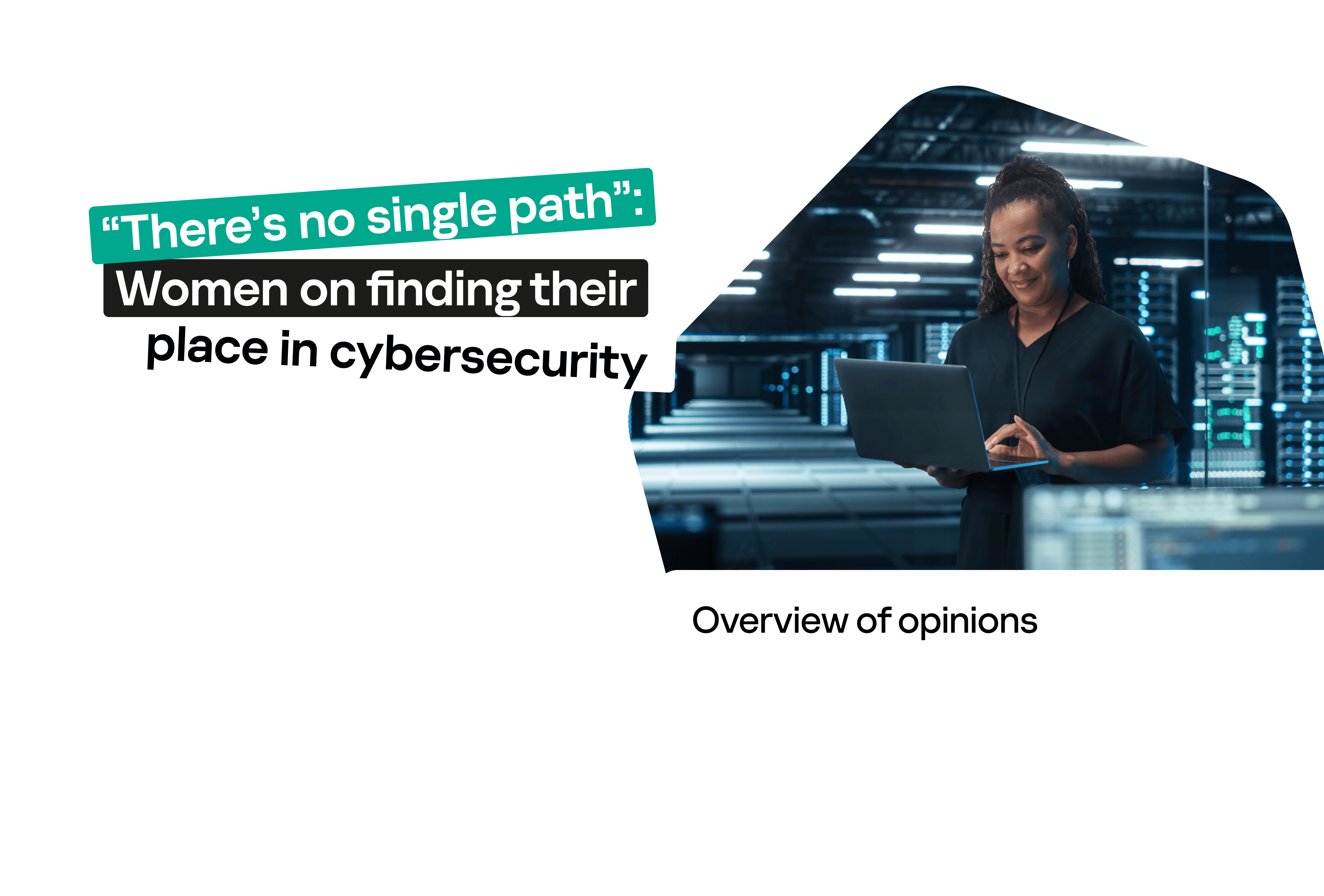
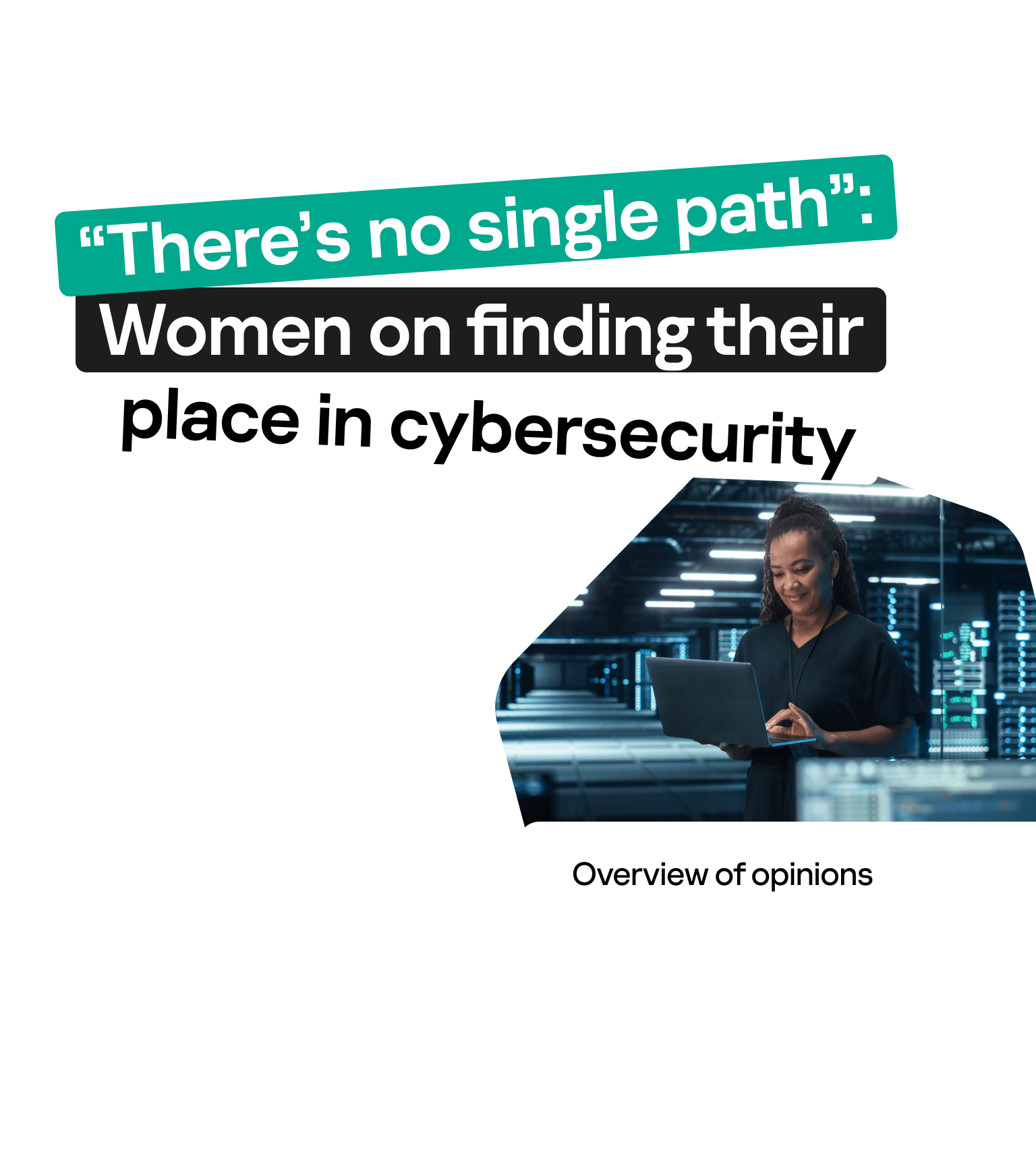
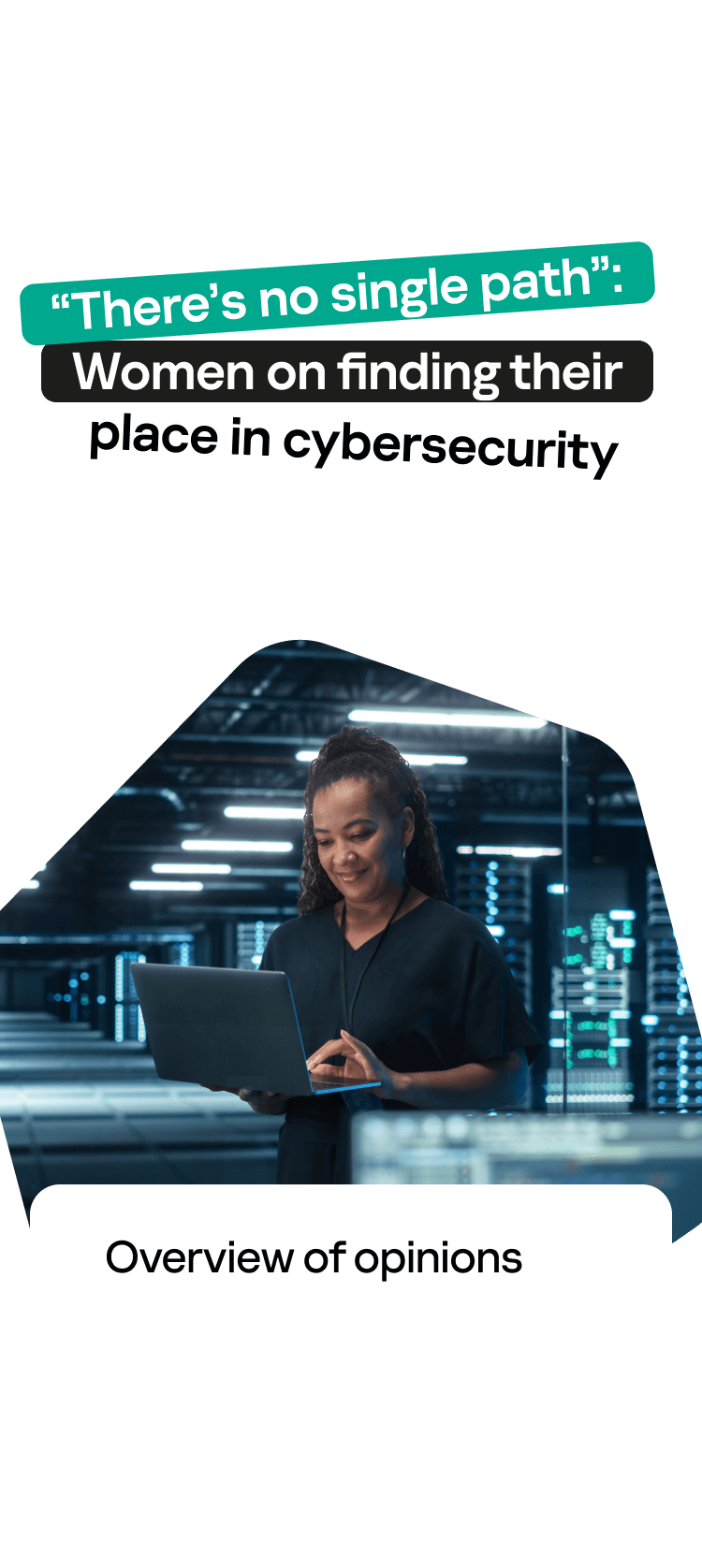
Breaking into cybersecurity often means breaking stereotypes.
In this series, we ask women from different backgrounds to share how they entered the field — what inspired them, what challenges they faced, and how perceptions about gender and technology have changed along the way. Their stories show that there’s no single path into cybersecurity — only curiosity, persistence, and a drive to protect the digital world.

Evgeniya Russkikh Head of Academic Affairs at Kaspersky
Why do you think many women hesitate to enter cybersecurity?

I think there are two main aspects here. The first one is the overall aura surrounding cybersecurity. Even the word security doesn’t immediately sound like something that belongs to a female domain. It creates an unconscious association that this field is somehow less welcoming to women, even though that’s not actually the case.

The second aspect is cultural and educational. Research in Russia and abroad, for example, by the European University, shows that girls are still encouraged far less often than boys to explore STEM subjects at school. A boy’s interest in physics or math is often praised, while a girl’s interest might be seen as unusual or even «too serious.» This shapes a much higher entry barrier for women as they need to be far more self-assured in their choices, often pursuing them without external validation. And when you’re a child or a teenager, it’s hard to go against the current, it takes extra confidence and inner motivation just to choose something like cybersecurity.

What was your own perception of cybersecurity before you entered the field — and has it changed?

Before I joined Kaspersky, I honestly didn’t have much of a perception of cybersecurity at all. I had a very basic understanding that it was an important and useful area within IT, but it felt distant and abstract. Back then, even personal cybersecurity habits weren’t a common topic, and everyday encounters with digital threats were minimal. Spam calls, phishing messages, or data leaks weren’t as widespread as they are now, so cybersecurity seemed like something invisible, something you couldn’t «touch.»

That’s what makes it so fascinating now, the more I got involved, the more tangible it became. Over the years, I realized how deeply cybersecurity intersects with everyday life, from how we communicate to how we shop or work online. What used to feel abstract now feels vital and very human.

How much do role models (or the lack of them) influence women’s decision to pursue cybersecurity?

Role models matter tremendously. Until you actually see someone thriving in a certain field, it’s hard to imagine yourself there. And when you lack those examples, choosing a career in cybersecurity can feel like swimming against the current or trying to break through a wall. It requires extra motivation and energy.

That’s why visible, relatable role models are so important, not the «heroic exceptions,» but women whose presence in tech is treated as normal. Seeing women at conferences, in leadership positions, or speaking on panels creates a sense of balance and normalcy. It helps shift the perception from «women in tech as an exception» to «women in tech as a norm.»

Do you see cybersecurity as harder to access compared to other tech fields, or is that a myth?

That’s a complex question. From a software development perspective, companies working in cybersecurity aren’t that different from other tech companies, we build products, test them, and develop technologies just like any other software organization. So, in that sense, the entry barrier isn’t higher.

However, when we talk about the more domain-specific areas of cybersecurity, things like cryptography or advanced analytics, it can feel more complex. These areas require strong mathematical skills, and since fewer girls are encouraged to study math deeply, that might create a perception that the field is harder to enter. But it’s not a question of capability, it’s a question of exposure and confidence.

For most entry-level roles, especially internships or junior positions, you don’t need to be a «Jedi-level» specialist to get started. It’s much more about curiosity and the willingness to learn. What’s really missing, in my opinion, is popularization, people simply don’t know what cybersecurity professionals actually do. The field still seems a bit mysterious, which makes it feel less accessible than it truly is.

What’s one thing you’d tell young women about cybersecurity that might change their minds about it?

I’d tell them not to focus on stereotypes or expectations and to just explore. Cybersecurity isn’t one monolithic industry; it’s a vast ecosystem full of different directions and career paths. Whether you’re into analytics, programming, communication, or design, there’s a place for you here.

If I were advising a young woman today, I’d suggest starting with curiosity: read interviews, watch talks, play educational games about cybersecurity and explore what this world actually looks like. Once you see the diversity within it, it stops feeling intimidating. And if you’re truly curious and enjoy solving problems, you’ll definitely find something that resonates with you. The field is growing, meaningful, and full of opportunities and it needs more people with different perspectives, especially women.

Victoria Vlasova Malware Analyst Team Lead at Kaspersky
Why do you think many women hesitate to enter cybersecurity?

Honestly, I’m not entirely sure, because in my own experience, I never really saw any reason not to choose this field. I know that for some girls, especially in school, computers or anything «tech-related» can seem like something meant for boys. One of my friends, for example, loved math but decided to study law instead because she thought IT was «too technical» and «not for girls.»

But for me, it was never like that. Maybe I was lucky with my environment, I studied in a physics and math high school, and interestingly, most of the top-performing students there were girls. We were the ones winning competitions and graduating with honors. So, I grew up in a setting where it felt completely natural for girls to be strong in STEM. I’ve heard the stereotypes, of course, but I always kept a healthy distance from them.

What was your own perception of cybersecurity before you entered the field — and has it changed?

My introduction to cybersecurity was, in a way, a happy accident. After finishing my math and physics high school, I didn’t know what exactly I wanted to study. Physics seemed underpaid, pure programming felt a bit boring, and I was just looking for something exciting. Then one day, I overheard two teachers in the elevator talking about students who had graduated in information security.

It was the first time I realized that such a faculty even existed, and I thought, «That sounds so cool! I’m going to study this!» That was literally how it started. I found a program in information security, applied, got in, and that’s how my journey began.

At the time, I had almost no real understanding of what cybersecurity was. I just liked how it sounded. Even when I joined my first job which, by the way, was Kaspersky I barely knew what exactly I would be doing. But it sounded exciting, and the company had a great reputation. Over time, I discovered how deep and diverse this field is. What started as curiosity turned into a long-term passion.

How much do role models (or the lack of them) influence women’s decision to pursue cybersecurity?

That’s a very personal question for me. I didn’t really have a specific role model in tech, but I did have a strong personal motivation that shaped how I saw myself. I was raised by my mother, and she did everything on her own. I didn’t grow up with the idea that someone else would provide for me, it was clear that if I wanted something, I’d have to achieve it myself.

That mindset that «I can buy myself flowers,» as the song says made me believe that independence and success were entirely within my control. So even without role models in cybersecurity, I had a role model of a woman who stood strong and did things herself. I think that spirit translated naturally into how I approached my career.

Do you see cybersecurity as harder to access compared to other tech fields, or is that a myth?

I wouldn’t say it’s harder but it does depend on what stage you’re entering. When I was applying to university, information security programs actually had some of the highest admission scores in the country. So yes, at that stage, it was a little more competitive. But beyond that, it’s really about interest.

If you find it fascinating, it won’t feel hard. Cybersecurity isn’t about innate genius or «secret hacker powers», it’s about curiosity, persistence, and problem-solving. You just need to genuinely enjoy what you’re doing, because this field rewards passion and constant learning.

What’s one thing you’d tell young women about cybersecurity that might change their minds about it?

I’d tell them this: cybersecurity is never boring. It’s a mix of everything, a bit of detective work, a bit of research, a bit of science, and a lot of curiosity. You can make it as technical or as analytical as you want; there’s room for everyone.

I’ve never found another profession as interesting as this one. It challenges you, surprises you, and lets you grow constantly. If you’re the kind of person who enjoys puzzles, mysteries, or figuring out how things work, this is the perfect place for you.

Jane Odoh Territory Channel Manager in Africa at Kaspersky
Why do you think many women hesitate to enter cybersecurity?

I think there are two main reasons why many women hesitate to get into cybersecurity.

First, the field can seem time-consuming and demanding, especially at the beginning. It requires continuous learning, constant skill upgrades, and a lot of dedication, which can look intimidating from the outside. Second, cybersecurity is still perceived as a male-dominated field, which can make women unsure if they’ll be welcomed or supported.

However, I believe this perception is beginning to change. In recent years, more women have entered the field and are doing incredibly well. In my own country, Nigeria, we already have inspiring figures like Confidence Staveley, who’s made a name for herself globally. Seeing women like her succeed helps reshape the narrative and shows that there’s absolutely space for us here.

What was your own perception of cybersecurity before you entered the field — and has it changed?

I actually started my career in technology, but cybersecurity was something new to me when I joined my first team in this area. At first, I thought it would be very complex, something you needed years of deep technical expertise to even approach. But my experience proved me wrong.

The people I worked with were incredibly patient and supportive, helping me understand the concepts step by step. Because of that, cybersecurity turned out to be not only approachable but genuinely fascinating. I realized that while it’s a serious field, it’s also creative, people-centered, and constantly evolving. It hasn’t been disappointing at all, in fact, it’s become something I’m truly passionate about.

How much do role models (or the lack of them) influence women’s decision to pursue cybersecurity?

Role models are important because they shape how women see themselves and what they believe is possible. When you have someone to look up to, especially someone who you can directly relate with, it helps you visualize your own potential.

But even when there aren’t many visible role models, I don’t think that should stop anyone. Personally, I’ve learned a lot from my male colleagues and peers in cybersecurity. I don’t limit myself because of gender, I see every professional around me as someone I can learn from. And if I don’t have a direct role model, then I aim to become one for the next generation. Sometimes, you have to be the example you wish you had.

Do you see cybersecurity as harder to access compared to other tech fields, or is that a myth?

It really depends on the angle you look from. In my experience, most professionals in cybersecurity come from other areas of tech such as networking, infrastructure, or application development and later decide to specialize. So yes, the learning curve can be steep, especially in the beginning, but that’s true for any skill worth mastering.

When I started, it was difficult to follow some of the conversations with customers and partners, the terminology, the concepts, everything felt overwhelming. But I made a commitment to myself: to dedicate at least 30 minutes a day to studying and understanding cybersecurity concepts. Over time, that consistency made all the difference.

So no, cybersecurity isn’t harder, it just requires discipline, patience, and curiosity. You might have to sacrifice some sleep, study late, or wake up earlier, but it’s absolutely achievable if you stay committed and open to learning.

What’s one thing you’d tell young women about cybersecurity that might change their minds about it?

I would tell them that cybersecurity is full of opportunities, it’s one of the few industries that will always be relevant, no matter how technology evolves. Every new invention, every new digital trend needs protection. Cybersecurity is the backbone that keeps innovation safe. It’s also a shared responsibility, not something for specialists alone. Everyone plays a role, from how we secure our devices to how we educate our families and friends. I always say that cybersecurity is a way of life. And for young women looking for a career that’s dynamic, impactful, and future-proof, this is one of the best choices you can make.

Lama Saqqour Web Content Analyst at Kaspersky
Why do you think many women hesitate to enter cybersecurity?

I think it mostly comes down to stereotypes. Cybersecurity, like IT in general, is still often seen as a male-dominated space. It’s a question people sometimes ask: «Do you really work in cybersecurity?» — as if it’s somehow unusual.

The truth is, those ideas come from old perceptions, that cybersecurity equals complex programming, something «too technical» for women. But that’s simply not true. In Kaspersky, for example, there are so many women in cybersecurity, from analysts, developers, managers, and researchers. It’s not about gender; it’s about interest and skills. The biggest barrier is not capability, it’s stereotypes, and they’re finally starting to break down.

What was your own perception of cybersecurity before you entered the field — and has it changed?

Before joining Kaspersky, I didn’t have a clear picture of what cybersecurity really was. My background is in web development, and I thought cybersecurity was mostly about penetration testing or security software, things that didn’t personally excite me.

But I always had an interest in online safety for children, and when I learned about the Kaspersky Safe Kids, something clicked. I thought, «That’s exactly what I want to do.» My academic studies were in data analysis and natural language processing, and for the first time, I saw how that knowledge could connect with real-world cybersecurity challenges. Now I know the field is incredibly broad, it’s not just about threats and hacking. It’s about protecting people, analyzing patterns, and making the internet safer for everyone.

How much do role models (or the lack of them) influence women’s decision to pursue cybersecurity?

Role models matter, especially at the beginning of your career. I come from the MENA region, in Syria and I remember discovering Abeer Khedr, who heads cybersecurity at the National Bank of Egypt. She also leads an initiative called Women in Tech and Cybersecurity in the Middle East, which I found really inspiring. Seeing someone from the same region succeed at that level made me believe that women like me could also belong in this field.

Do you see cybersecurity as harder to access compared to other tech fields, or is that a myth?

It’s not necessarily harder, but it does come with more responsibility. In cybersecurity, your work directly affects people’s safety, especially in areas like child protection or digital privacy. That gives the job more weight.

At the same time, the field isn’t as narrow as people think. There are many different paths, you can be a data analyst, phishing analyst, spam analyst, developer, or penetration tester. Whatever your interests are, there’s a place for you here. The key is passion and persistence.

And honestly, working at Kaspersky made me realize how welcoming cybersecurity can be. On my very first day, my boss introduced me to the team, two men and five women and as we walked through the office, I met even more women developers and team leads. It was such a refreshing moment. I thought, «Okay, this is the environment I want to grow in

What’s one thing you’d tell young women about cybersecurity that might change their minds about it?

I’d tell them that cybersecurity is like solving puzzles that protect real people. If you love analyzing data, connecting dots, and finding patterns, this field is for you. It’s not just about computers; it’s about people, families, and communities.

Cybersecurity has room for creativity, logic, empathy, and innovation all at once. For me, it’s the perfect mix of detective work, research, and social impact. I’d tell any young woman: If you’re curious and you care about making the internet safer, cybersecurity is waiting for you.

Each story we’ve heard proves that there’s no single way to enter cybersecurity — and no single definition of who belongs here. Whether through programming, data analysis, communications, or curiosity about digital safety, these women show that the field grows stronger with every new perspective. By challenging stereotypes and opening doors, they help make cybersecurity not only safer, but also more inclusive.

Evgeniya Russkikh Head of Academic Affairs at Kaspersky
Victoria Vlasova Malware Analyst Team Lead at Kaspersky
Jane Odoh Territory Channel Manager in Africa at Kaspersky
Lama Saqqour Web Content Analyst at Kaspersky

Learn more career
insights to create a more
diverse and secure industry, championing women in cybersecurity